

Educational GuideSpecialty Research
What Is Glutathione? Benefits, Forms and Human Evidence
Understand glutathione, reduced vs liposomal forms, oral studies, skin findings, side effects and NAC. Read the 2026 evidence and research-material limits.
Explore 75 evidence-led guides across six research hubs and a dedicated lab-methods track. Each guide is written for research-use-only context, source checking, and clearer comparison.
Use a curated hub for a guided pathway, or filter every guide below.
Identity, mechanisms, evidence limits, and study-design context.
Agonist classes, molecular design, comparison guides, and evidence status.
GHRH analogs, secretagogues, receptor pathways, and evidence boundaries.
Identity-led guides for neuroactive research compounds and comparisons.
Mitochondrial, peptide-regulation, and aging-pathway research coverage.
Research compounds that sit outside the library’s core pathway families.
Showing 75 of 75 guides.
Understand glutathione, reduced vs liposomal forms, oral studies, skin findings, side effects and NAC. Read the 2026 evidence and research-material limits.

What is DSIP? Compare positive and weak human sleep studies, deep-sleep claims, hormone findings, side effects and the current emideltide evidence.

What is Selank? Read the human anxiety studies, GABA research, onset and half-life questions, side effects and how it differs from Semax.

Semax is a synthetic seven-residue peptide. Examine its exact identity, human imaging and rehabilitation studies, BDNF mechanisms, newer animal findings and unresolved safety questions.

Understand Pinealon and the EDR sequence, explore actual human and laboratory studies, compare Epitalon, and assess memory, sleep and material questions.
An identity-first guide to KLOW's four declared components, KPV's differentiating role, evidence limits, and lot-documentation questions.
A source-verified guide to the GLOW blend's 50:10:10 composition, three component identities, experimental evidence, trial boundaries, and analytical limits.
A source-verified guide to BPC-157 and seven-residue TB-500 identity, component evidence, the one direct rat experiment, and blend-level limits.
An identity-first audit of Thymalin as a tissue-derived fraction, its literature, source quality, name collisions, and analytical documentation.
A source-verified guide to CJC-1295 No DAC and ipamorelin identity, receptor families, co-stimulation literature, clinical records, and evidence gaps.
An identity-first guide to the Follistatin-344 precursor, FS315 mature chain, ligand sequestration, delivery-system gaps, human evidence, and analytical documentation.
An identity-first guide to Melanotan I sequence, measured melanocortin receptor binding, Arizona lineage, human evidence, SCENESSE context, and analytical documentation.
A source-audited guide to PE-22-28 identity, sortilin and spadin lineage, biphasic TREK-1 evidence, replication limits, and documentation.
A source-based guide to Dihexa: the retracted mechanism paper, mixed later animal studies, related human prodrug trials and the limits of safety and capsule claims.
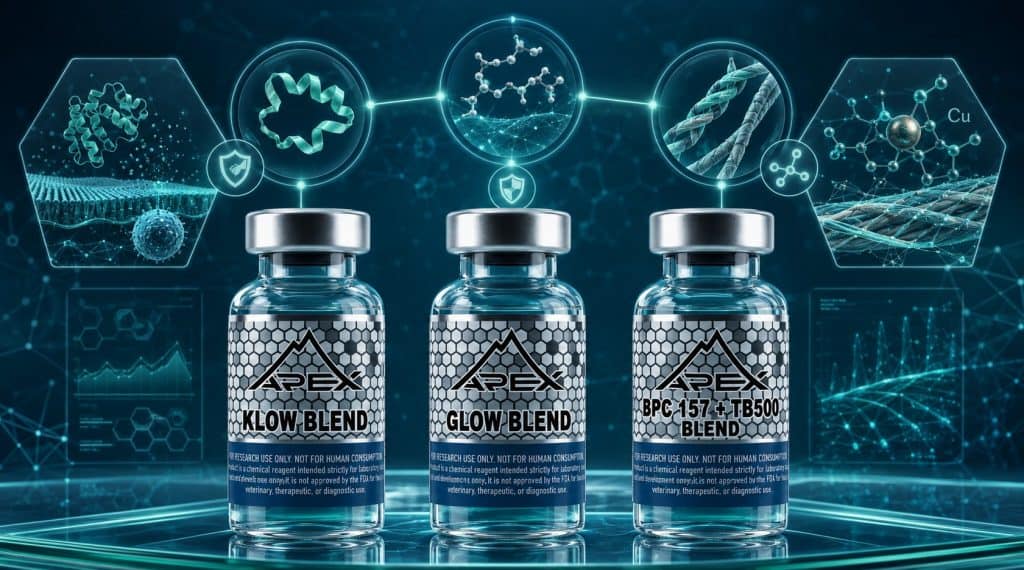
KLOW vs GLOW: compare the 10 mg KPV difference, exact component amounts, the BPC-157/TB-500 option and what published analytical records can establish.
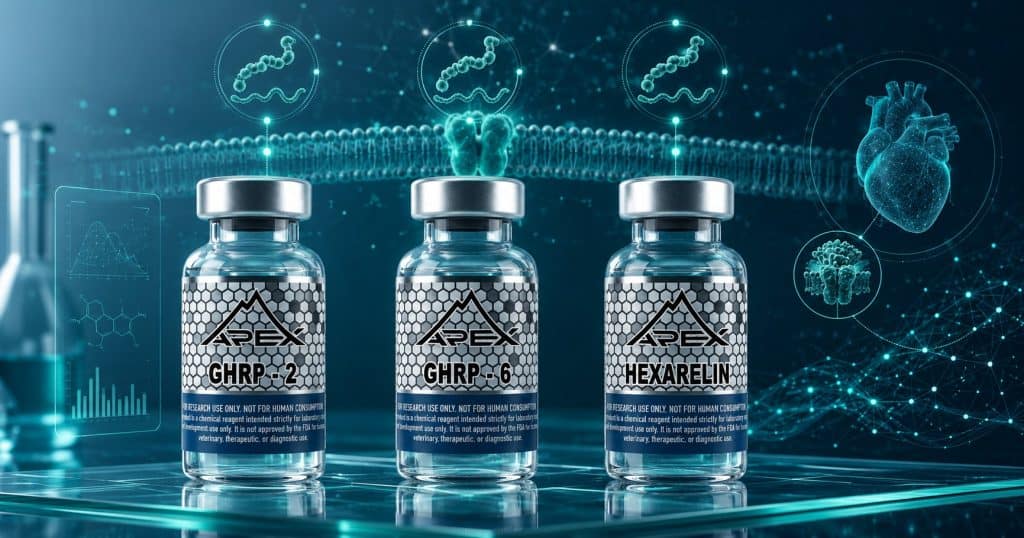
A criteria-first comparison of GHRP-2, GHRP-6, and Hexarelin that separates direct evidence, receptor systems, model differences, and unresolved questions.
An evidence-graded guide to endogenous LL-37, membrane and immune research, mixed topical-trial findings, and controls for synthetic research reagents.

An evidence-lane guide that keeps native IGF1 splice-variant and unmodified E-peptide findings separate from the supplier-defined PEG-MGF construct.
An evidence-scoped FOXO4-DRI guide covering D-retro-inverso design, the Baar FOXO4-p53 model, direct preclinical findings, and the human-evidence boundary.

A source-ranked explainer of the conflicting identities used under the Adamax name, the direct-evidence gap, and the limits of Semax comparisons.

An evidence-led guide to cagrilintide and CagriSema, including molecular identity, amylin and GLP-1 rationale, clinical trials, result interpretation, and regulatory status.
An evidence-led mazdutide guide covering dual GLP-1/glucagon pharmacology, GLORY-1 and DREAMS results, China approvals, comparison boundaries, and RUO material context.

An evidence-scoped Survodutide guide covering BI 456906 identity, dual GCGR/GLP-1R biology, obesity and MASH evidence, and current development status.
A source-dated explanation of TRIUMPH-1 design, week 80 retatrutide results, estimands, extension limits, safety signals, and regulatory status.
A research-grade overview of thymosin alpha-1, the 28-amino-acid thymic immunomodulatory peptide: Goldstein-lineage discovery, Toll-like-receptor mechanism, antiviral and sepsis research, and reagent verification.
An evidence-led comparison of Liraglutide C16 acylation and Dulaglutide Fc-fusion engineering, the direct AWARD-6 trial, distinct evidence programs, and current regulatory identities.
An evidence-scoped SS-31 guide covering elamipretide identity, cardiolipin biology, preclinical and trial results, and current FORZINITY FDA status.
An evidence-scoped guide to 5-Amino-1MQ identity, NNMT biology, direct cell and mouse studies, human evidence gaps, and research-grade documentation.
An evidence-scoped KPV peptide guide covering Lys-Pro-Val identity, alpha-MSH lineage, model-specific mechanisms, preclinical findings, human evidence gaps, and analytical verification.
An evidence-led guide to SLU-PP-332 as a small-molecule pan-ERR chemical probe, with model-specific findings and a symmetric SLU-PP-915 comparison.

A source-dated landscape of next-generation GLP-1 research architectures, evidence lanes, program status, and molecule-specific guide handoffs.

A source-led Triptorelin guide covering technical identity, pulse-versus-continuous GnRH signaling, evidence boundaries, approved-formulation distinctions, and analytical verification.
An evidence-scoped Long R3 IGF-I guide covering 83-residue identity, reduced IGFBP affinity, direct model findings, and boundaries with native IGF-1, MGF, and mecasermin.
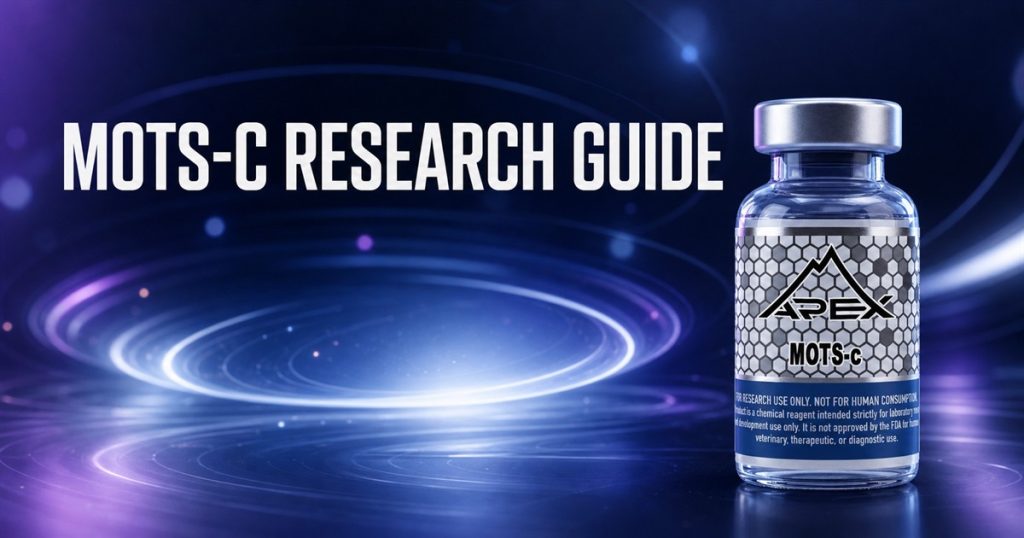
An evidence-scoped MOTS-c guide covering its 16-residue identity, correct MT-RNR1 locus, AMPK and nuclear-signaling studies, human evidence, and unresolved trial outcomes.
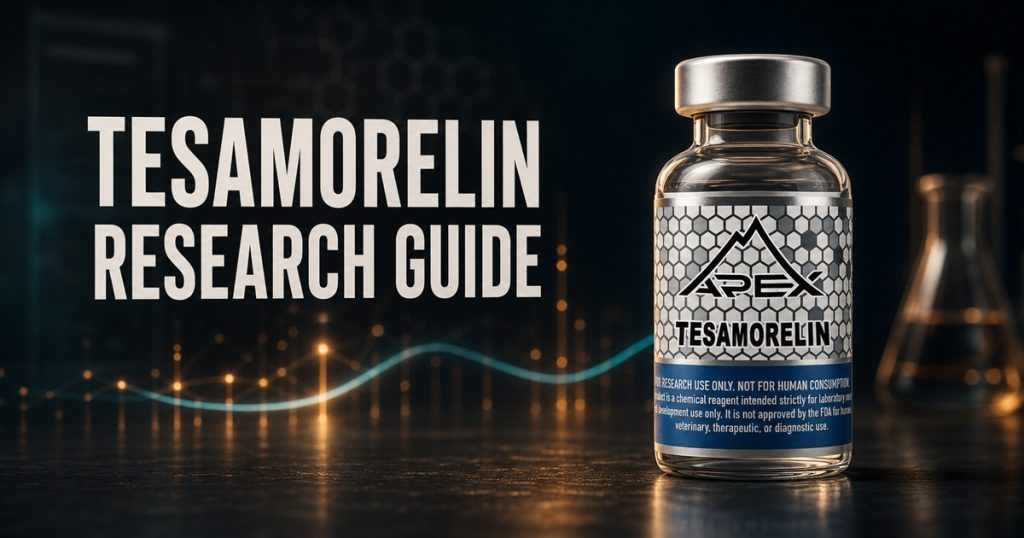
A research-grade profile of tesamorelin, the stabilized GHRH(1-44) analog: trans-3-hexenoyl modification, GHRH-receptor mechanism, pharmacokinetics, and how it differs from sermorelin.
An evidence-scoped Sermorelin guide covering GHRH(1-29)-NH2 identity, GHRHR signaling, rat pharmacokinetic limits, Geref history, and lot-level verification.
Understand semaglutide, oral versus injectable formulations, half-life, weight-loss and withdrawal studies, side effects, and current U.S. product labels.
A symmetric semaglutide, tirzepatide, and retatrutide comparison covering single, dual, and triple receptor architecture, direct evidence, cross-trial limits, and July 2026 status.
A symmetric BPC-157 and GHK-Cu comparison covering chemical identity, evidence lanes, mechanism limits, human-evidence gaps, and research-design controls.
A source-matched Ipamorelin-versus-CJC-1295 comparison covering receptor identity, compound-specific evidence, DAC naming, and direct-study gaps.
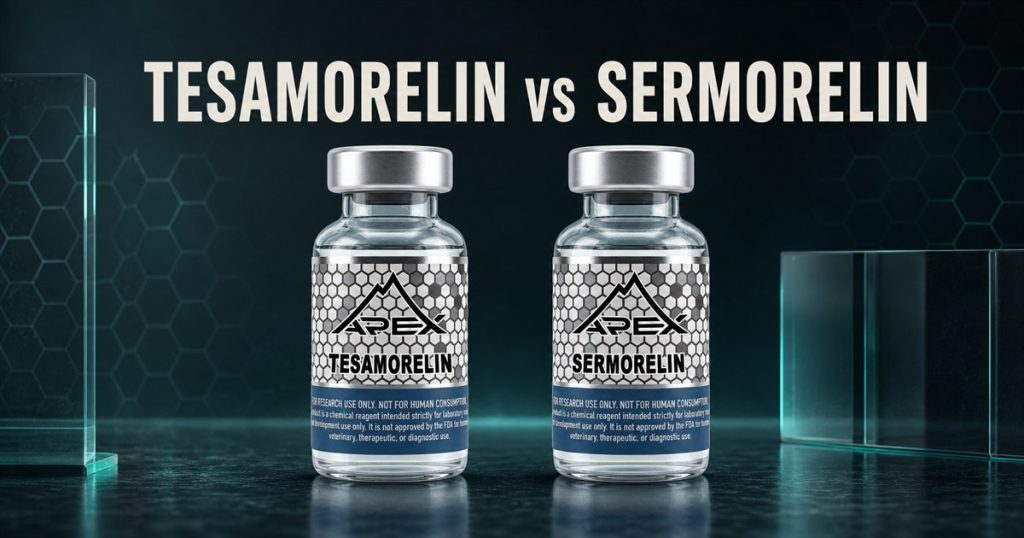
A symmetric Tesamorelin-versus-Sermorelin comparison covering identity, shared GHRHR signaling, FDA histories, evidence differences, and research-design fit.

A source-led guide to PT-141 identity, Arizona melanocortin lineage, FDA-aligned nonselective receptor language, and Vyleesi separation.
An evidence-scoped NAD+ guide separating coenzyme biology, age-related mechanisms, NR and NMN precursor trials, and limited direct NAD+ human research.

A concise map of specialty research peptide families, evidence depth, regulatory boundaries, and the exact Apex guides that own each compound question.
A source-led map of longevity and bioregulator research lanes, exact material identity, evidence maturity, and current SS-31 regulatory context.
An evidence-led guide to peptide mass spectrometry, charge states, intact-mass and MS/MS interpretation, method limits, and orthogonal verification.

A method-aware explanation of HPLC area percent, orthogonal identity evidence, the unresolved 1%, and lot-specific COA review.

A primary-source framework for separating RUO reagents, APIs, compounded drugs, and approved finished products—and auditing what quality evidence proves.
A vendor-neutral five-step framework for evaluating peptide suppliers through material scope, lot traceability, identity evidence, method-qualified purity, and a documented disposition.

A source-led map of growth hormone peptides, receptor families, evidence layers, regulatory boundaries, and the Apex guides that own each research question.
A current Retatrutide-versus-Tirzepatide comparison covering receptor scope, evidence maturity, FDA status, and the pending TRIUMPH-5 head-to-head study.
An evidence-scoped Tirzepatide guide covering GIPR/GLP-1R pharmacology, representative SURPASS and SURMOUNT research, and current FDA formulation boundaries.
An evidence-led map of GLP-1 mono-agonists, dual and triple agonists, GLP-1/glucagon programs, amylin combinations, and adjacent metabolic tools.
A source-led map of tissue-repair research peptides, exact identity boundaries, evidence maturity, and current SS-31 regulatory context.
Side-by-side research comparison of BPC-157 and TB-500 — mechanism scales, structural differences, half-life, and combination research context with verified PubMed citations.
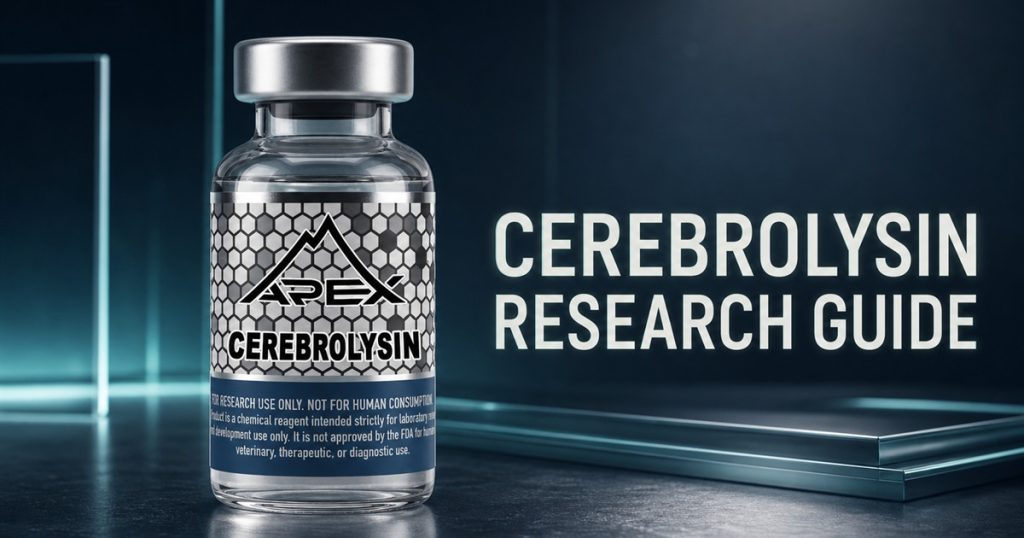
Cerebrolysin research guide covering the porcine-brain peptide-and-amino-acid mixture's neurotrophic-factor-like mechanism, published clinical trial data, and pharmacokinetic profile from decades of research.
A source-led taxonomy of eight CNS research materials, their exact identity classes, evidence ownership, BBB limits, and regulatory boundaries.
A source-matched Sermorelin-versus-CJC-1295 comparison covering identity, shared GHRHR signaling, DAC nomenclature, evidence boundaries, and Geref history.
An evidence-scoped Selank versus Semax guide comparing sequence, research mechanisms, models, direct human observations, analytical verification, and unresolved claims.
An evidence-graded guide to GHK versus GHK-Cu, model-specific findings, human-evidence limits, and the controls needed for a defensible reagent study.
An evidence-led Epithalon guide separating telomere changes in cells, limited human retinal and circadian studies, animal lifespan results, Epithalamin extract claims and unresolved safety.

A source-calibrated Melanotan II research guide covering exact identity, melanocortin receptor pharmacology, Arizona lineage, and related-drug boundaries.
AOD9604 is a synthetic 16-residue growth-hormone fragment analogue, also called LAT8881. Explore its exact identity, animal findings, historical obesity trial, later human pain studies and…
An identity-first comparison that keeps CJC-1295 DAC pharmacokinetics separate from Modified GRF 1-29 and maps each finding to its tested construct.
A source-led Ipamorelin guide covering technical identity, GHS-R1a pharmacology, selectivity evidence, human PK/PD limits, FDA status, and assay boundaries.
What is Retatrutide? Understand triple agonism, human trial results, fat versus lean tissue, side effects and the latest development status.
A material-first guide to seven-residue Ac-LKKTETQ, its distinction from full-length thymosin beta-4, evidence-attribution limits, and study controls.
Checked laboratory formulas for concentration, aliquot volume, unit conversion, U-100 label and graduation limits, and calculation error control.
A method-focused guide to peptide HPLC chromatograms, area percentages, integration decisions, system suitability, and orthogonal mass evidence.

A source-scoped guide to bacteriostatic water composition, storage labels, solvent differences, and research-protocol decisions.
A method-neutral workflow for reading peptide certificates of analysis, including traceability, HPLC area percentage, mass spectrometry, specifications, laboratory competence, and red flags.
A state-first peptide storage framework covering source precedence, environmental risks, documentation, excursions, and defensible stop conditions.
A symmetric semaglutide-versus-tirzepatide comparison covering receptor design, SURPASS-2 and SURMOUNT-5, evidence limits, and regulatory identity.
An evidence-scoped BPC-157 research guide covering chemical identity, model-specific mechanisms, preclinical findings, human evidence limits, and analytical verification.
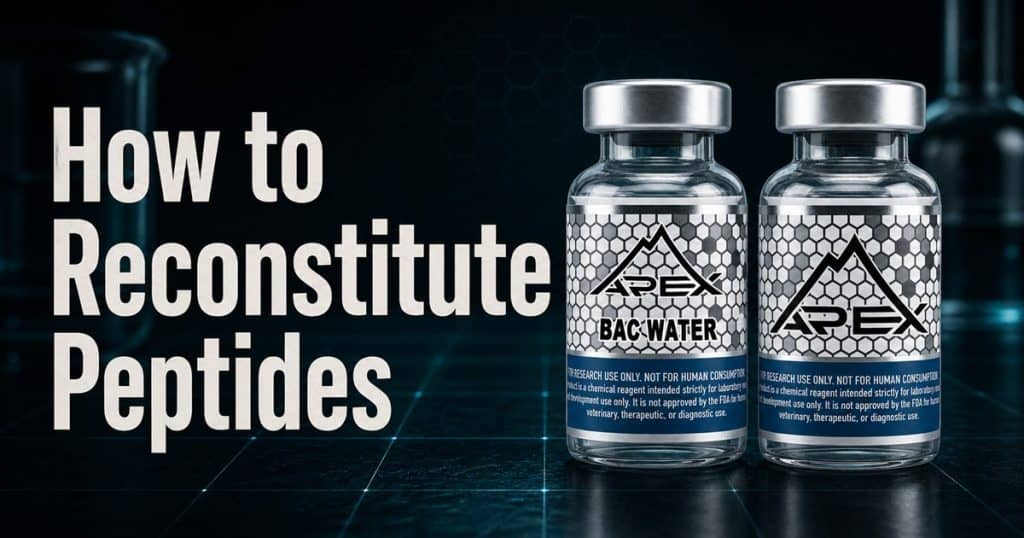
Research-only steps for verifying a lyophilized peptide, selecting a compatible solvent, calculating stock concentration, and documenting the result.
Try a broader search or use Reset filters above.

Apex Laboratory is a specialized supplier of high-purity chemical reagents and peptides. All products listed are strictly for in-vitro laboratory research and development use only.