About Apex Laboratory
Apex Laboratory supplies research peptides and laboratory reagents through apexlab.org. The official catalog brings together product formats, labeled quantities, current prices and availability. Our published COAs provide configuration-specific documentation to review alongside the product listing.
Apex Laboratory operates exclusively through apexlab.org for its research-reagent catalog, and all products are supplied strictly for in-vitro research use only, not for human or veterinary use. The fastest way to reach our team is through our Contact Support page.
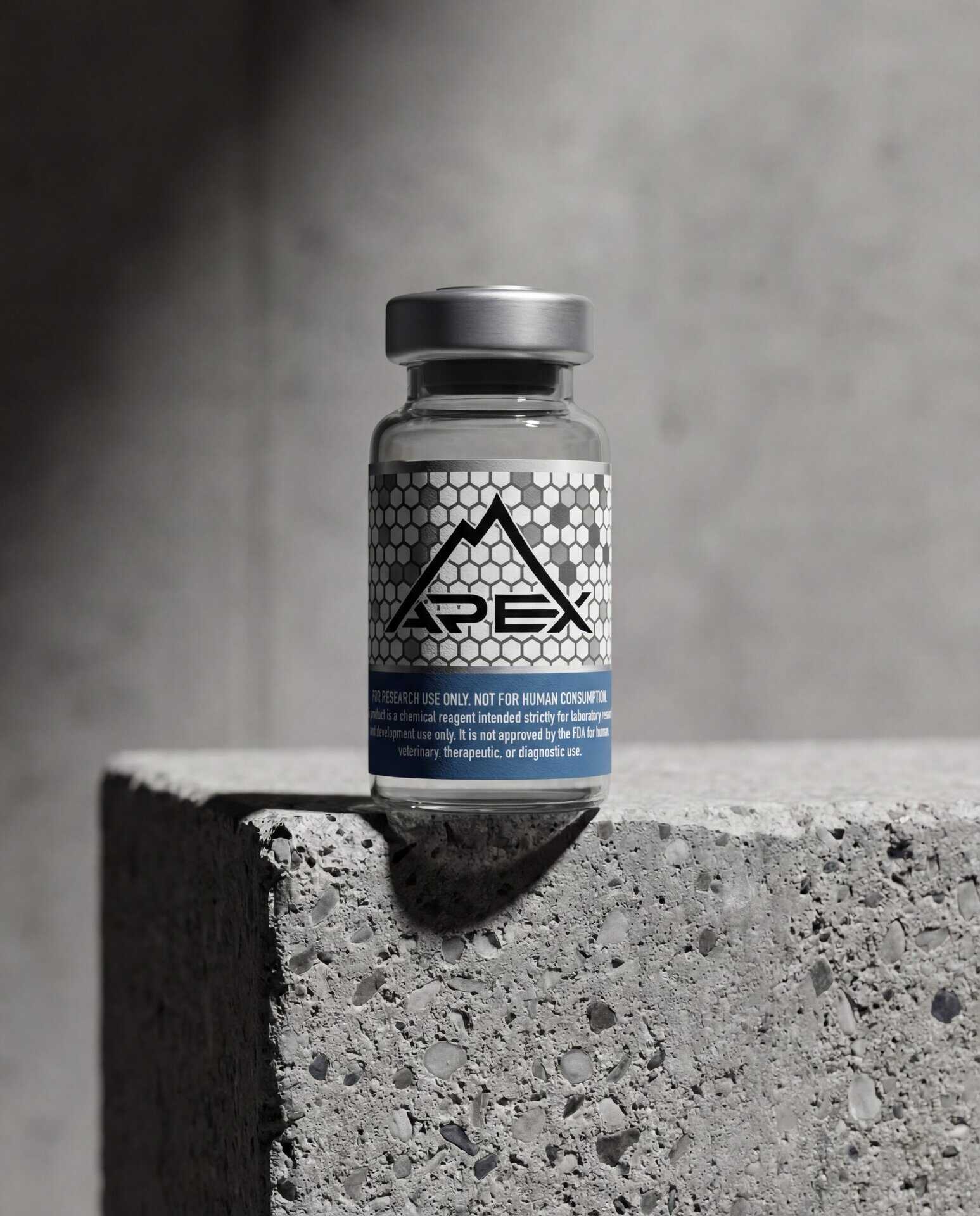
Reviewing Product Documentation
Review a material through its product listing and the applicable published COA. Check the configuration and lot, identify the report issuer, and read each result with its method, unit and acceptance criterion. Apex-issued reports contain in-house results; they do not establish independent accreditation or a third-party laboratory endorsement.
Product facts. Published records. Clear scope.
The useful question is whether the documentation matches the material you are evaluating. Apex Laboratory publishes in-house COAs with configuration, lot, issue date, methods and results. Open the complete record, compare the relevant measurements, and keep the report's scope in view.
Read the methods
Different measurements answer different questions. Read the identity, chromatographic purity, content and other applicable result rows separately. The methods and units in the specific report determine what each result means.
Open the full record
Product pages connect available configurations to their published COA records. Use the COA library to open the complete documentation. A published configuration report does not, by itself, identify the lot currently shipping.
Match the research requirements
Materials are supplied for in-vitro laboratory research. Evaluate the actual product format and applicable report, including its sampling scope and any reporting limits. Confirm any required lot or additional documentation with support before ordering.
Different measurements. Different questions.
What does area percentage show?
Chromatography separates components under the stated method. When purity is reported as detector-area percentage, read the assigned peak area against the included total area. That percentage is a different result from measured content in mg per vial. This diagram illustrates the method; it is not a trace from an Apex lot.
What does the identity result show?
Electrospray ionization mass spectrometry measures ions by their mass-to-charge values. Read the reported values alongside the stated identification criteria and supporting measurements. This diagram is illustrative; the applicable COA supplies the actual result and method.
We supply chemical reagents for in-vitro laboratory research. We do not make therapeutic claims or provide dosing, prescribing or treatment recommendations. Our published records describe the samples and configurations they cover. Use their stated methods, results and limits when evaluating a material.
That's the standard. It hasn't changed since day one.
Our Story
Reading the record before ordering.
Answers to common questions about product documentation and published analytical records. For questions about a material, report or order, contact support.
01 Who is Apex Laboratory?
Apex Laboratory is a U.S.-based supplier of research peptides and laboratory reagents for in-vitro applications. The official catalog is apexlab.org. Product listings identify available formats and quantities, while published in-house COAs provide configuration and lot-specific documentation.
02 How can I evaluate Apex before ordering?
Start with the catalog, then open the relevant record in our COA library. Compare the product configuration, lot, issuer, methods, units and result limits. Our company verification page brings together official links, policies and practical verification steps.
03 What does a chromatographic purity percentage mean?
Where a report uses integrated detector area, a 99% result means the assigned target peak contributes 99% of the included area under that method. It is not a statement that 99% of the vial's total mass is the target material. Read the report's actual value and criterion; content, identity and other measurements require their own result rows. The COA reading guide includes a worked example.
04 Who issues Apex's published COAs?
The current published configuration reports are issued by Apex Laboratory's in-house team. Check the issuer named on the report and the configuration and lot it covers. An Apex-issued COA should not be described as independent third-party verification.
05 Do you publish certificates of analysis publicly?
Yes. The COA library provides public access to the published configuration records and their supporting detail. Match the complete lot and configuration to your material. If your research requires a particular lot, contact support before ordering; the latest published record is not an automatic shipping-lot confirmation.
06 How should I read a report's date and sampling scope?
The COA issue date identifies the document date. Read the sampling scope, methods and results in the specific record. Do not treat the issue date as a test, manufacturing or expiry date, or assume a retesting schedule from it. Contact support if your research requires additional lot-specific information.
07 What is HPLC and why does it matter?
High-performance liquid chromatography separates sample components under a specified method. A detector records the resulting signal. When the COA reports chromatographic purity as integrated detector area, that percentage describes the assigned peak's share of the included signal. It is separate from content in mg per vial. See the HPLC purity guide for a worked example.
08 What is ESI-MS and what does it tell you?
Electrospray ionization mass spectrometry measures ions by their mass-to-charge values. In a COA, read those measurements with the stated identification criteria and supporting tests. The result should not be read as the material's purity percentage or amount per vial.
09 What does "research use only" actually mean?
Apex materials are supplied for in-vitro laboratory research, not for human or veterinary use. Product descriptions and guides do not provide medical, diagnostic, dosing or treatment advice. Select and handle materials according to your laboratory's requirements and the applicable product documentation.
10 Do you use independent third-party verification?
The current published configuration reports are Apex Laboratory in-house records. If you need an external laboratory report for a particular material, contact support to ask what documentation is available before ordering. Check the actual issuer and scope of any report you receive.
Still have a question? Email our editorial team
See the Public COA Archive