Batch documentation
Certificate of analysis
Apex Laboratory results for the listed configurations. Match the lot on your label with the report.
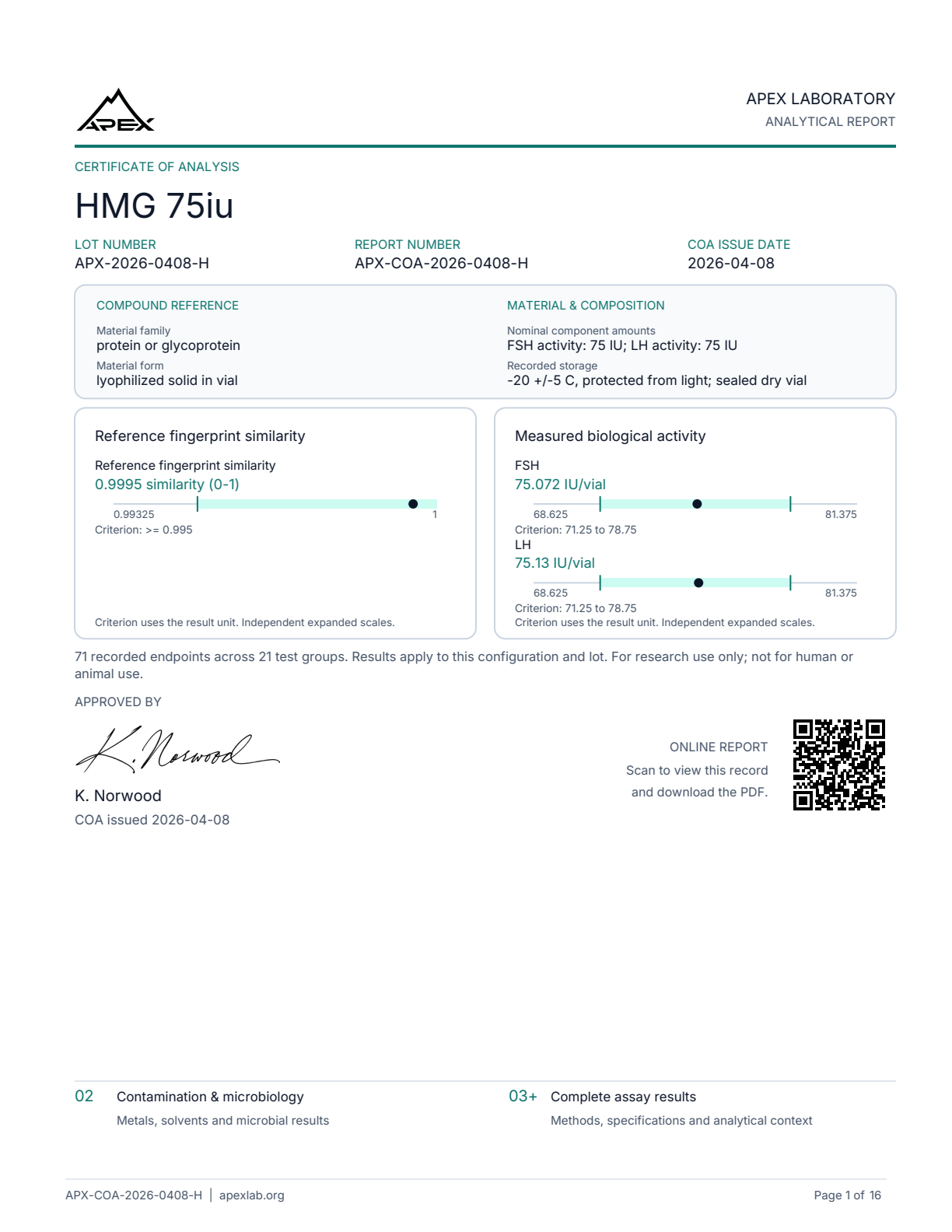
HMG 75iu
- Multipeak fingerprint similarity to defined reference
- 0.9995 similarity (0-1)
- FSH activity per vial
- 75.072 IU/vial
- LH activity per vial
- 75.13 IU/vial
- FSHR relative potency
- 100.096 % reference response potency
Reference fingerprint similarity

About this graph
Recorded scalar results against their stated specifications. These are measured endpoint summaries, not instrument traces.
Measured biological activity

About this graph
Calibrated active content, concentration or activity compared with the stated same-unit specification. Each row uses its own labeled scale; no conversion from chromatographic purity is made.
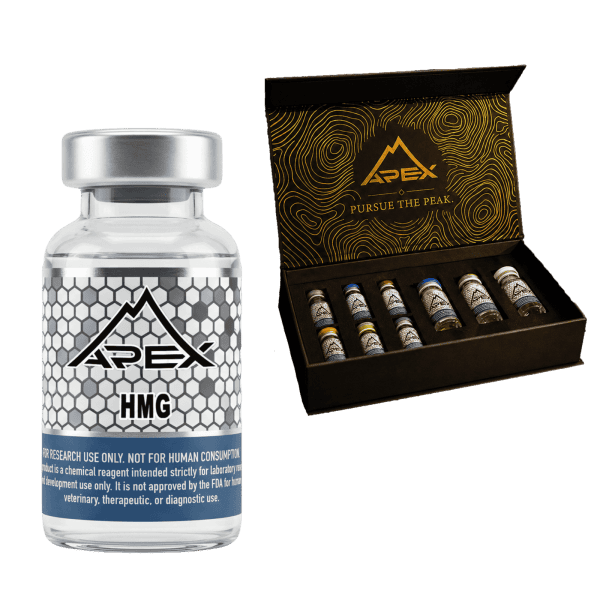
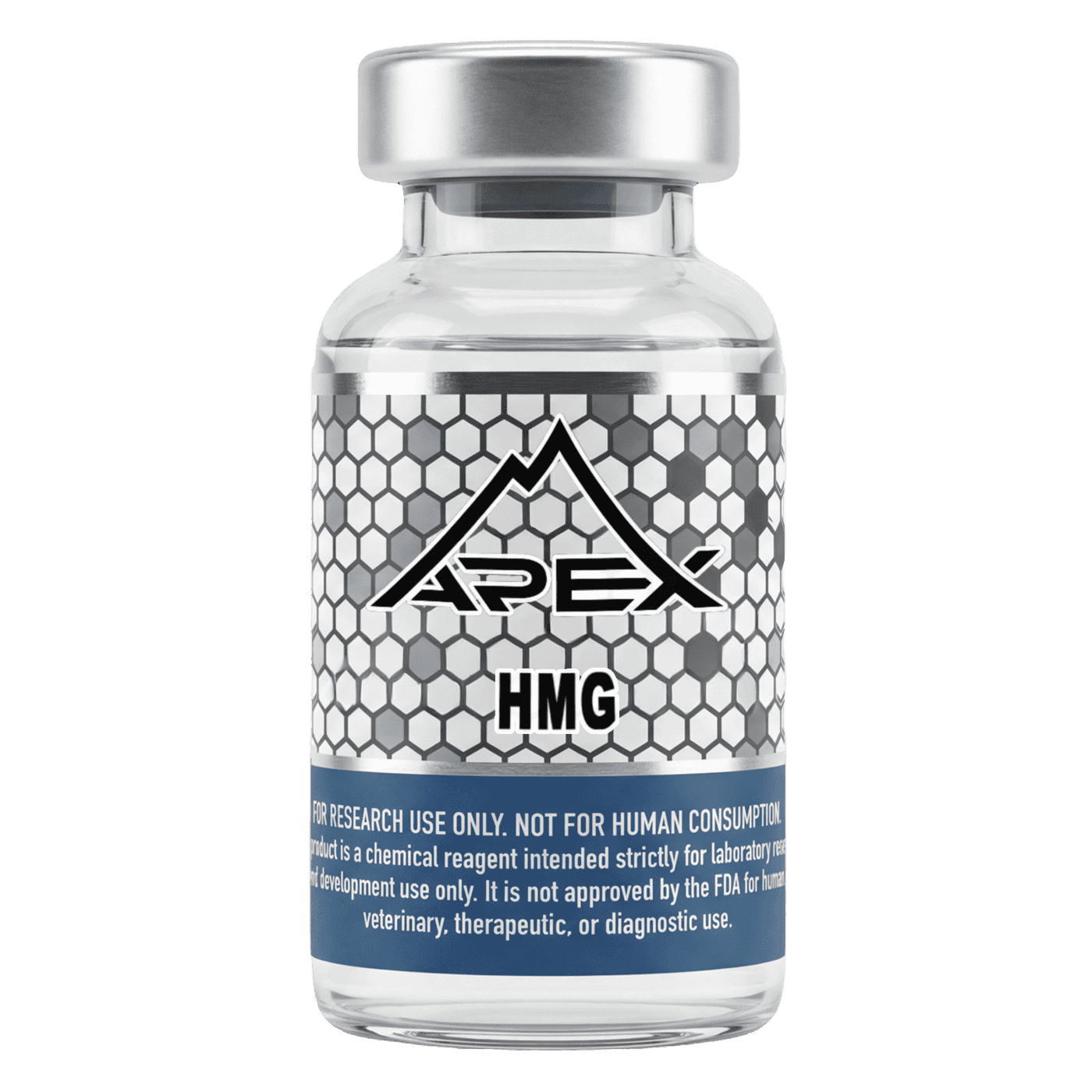
HMG 75iu (human menopausal gonadotropin, also called menotropins) is a urinary-derived glycoprotein mixture standardized to deliver 75 IU of follicle-stimulating hormone (FSH) activity alongside 75 IU of luteinizing hormone (LH) activity per vial. HMG is a biological mixture, so FSH and LH activity are evaluated separately from chemical identity and chromatographic purity. The latest published in-house report is HMG 75iu — lot APX-2026-0408-H (COA issued 2026-04-08). Match the report configuration and lot to the label on your material. This product is supplied for in-vitro and ex-vivo laboratory research only; it is not approved for human consumption, veterinary use, or any therapeutic application.
Compound Overview
HMG is not one compound but a co-formulated pair of gonadotropins purified from the urine of post-menopausal donors, where circulating gonadotropin output is naturally elevated. Both active constituents — FSH and LH — belong to the heterodimeric glycoprotein hormone family. Each is built from a shared, non-covalently associated alpha subunit common to FSH, LH, hCG and TSH, paired with a hormone-specific beta subunit that confers receptor selectivity. The beta chain is what tells FSH from LH at the molecular level; the alpha chain is interchangeable across the family. Each assembled heterodimer runs at roughly 30 kDa, with the carbohydrate (N-linked and, on LH/hCG, additional structural) content accounting for a substantial fraction of that mass and governing circulating stability.
The two constituents drive distinct gonadal targets that researchers often study in combination. The FSH component (CAS 9002-68-0) signals through the FSH receptor on granulosa and Sertoli cells, supporting follicular recruitment and aromatase expression. The LH component (CAS 9002-67-9) signals through the LH/CG receptor on theca and Leydig cells to drive androgen and progesterone steroidogenesis. What distinguishes HMG from a single recombinant gonadotropin — or from hCG, which provides only LH-receptor agonism — is that it presents both receptor inputs at a fixed 1:1 IU ratio, making it useful for modeling the two-cell, two-gonadotropin signaling behind folliculogenesis and steroidogenesis in vitro.
Research Background & Published Literature
Menotropins have one of the longest research histories of any gonadotropin reagent, with purified urinary preparations standardized against international reference units since the mid-twentieth century. The decades since have produced an extensive reproductive-endocrinology literature on how combined FSH and LH receptor activation governs the two-cell model of gonadal steroidogenesis, granulosa-cell aromatase induction, and follicle development in cell-culture and animal-model systems. Because HMG carries defined FSH and LH activity in one preparation, it remains a common comparator in studies contrasting combined gonadotropin input against recombinant single-hormone or LH-selective stimuli.
Researchers exploring the published literature surrounding this reagent and its constituents can review the following sources for additional context on gonadotropin signaling, receptor pharmacology, and experimental applications in controlled laboratory settings:
- PubMed — human menopausal gonadotropin, FSH/LH and steroidogenesis research
- PubMed — menotropins, gonadotropin receptors and folliculogenesis
- PubChem — menotropins / gonadotropin glycoprotein entries
Technical Specifications
| Product Name | HMG 75iu |
| Other Names / Synonyms | Menotropins; human menopausal gonadotropin; HMG; urinary FSH/LH |
| Classification | Gonadotropin glycoprotein mixture (FSH + LH) / research reagent |
| CAS Number (FSH component) | 9002-68-0 |
| CAS Number (LH component) | 9002-67-9 |
| Molecular Weight | ~34,000 g/mol (glycoprotein mixture; each heterodimer ~30 kDa) |
| Structure | FSH and LH, each a shared α subunit + hormone-specific β subunit heterodimer |
| Potency Specification | 75 IU FSH + 75 IU LH (± 20% per WHO IRR) — see COA above |
| Identity Method | In vivo bioassay (Steelman-Pohley for FSH; Van Hell rat seminal vesicle for LH) |
| Compendial Reference | USP Menotropins monograph · EP 1976 |
| Physical Form | Lyophilized (freeze-dried) powder · sealed vial |
| Recommended Diluent | Bacteriostatic water or sterile laboratory-grade water |
| Available Sizes | 75 IU vial |
| Intended Use | In-vitro / ex-vivo research only — not for human consumption |
Storage, Handling & Stability
Like all glycoprotein gonadotropins, HMG is sensitive to heat, repeated freeze-thaw, and surface adsorption at low concentrations. Store the sealed lyophilized vial at -20°C for long-term stability; the freeze-dried matrix is considerably more robust than the reconstituted solution. After reconstitution with a sterile diluent such as bacteriostatic water, hold working solution at 2–8°C and consume it within a short window, aliquoting before freezing to avoid repeated cycling that can dissociate the alpha/beta heterodimer and erode measured bioactivity.
- Reconstitute gently — direct the diluent against the vial wall and swirl rather than vortexing, since shear and foaming can denature glycoprotein hormones.
- For dilute working stocks, consider a low percentage of carrier protein in your buffer to limit adsorptive loss of FSH/LH to plasticware.
- Minimize time at ambient temperature during handling and reseal the vial promptly to limit moisture uptake by the lyophilate.
- Label every aliquot with reagent name, FSH/LH IU, reconstitution date, and operator initials so potency can be traced back to the original container’s batch label and its matching COA.
Quality Assurance & Analytical Verification
HMG cannot be released the way a single synthetic peptide is. Because it is a heterogeneous, glycosylated, urinary-derived mixture, a single molecular-ion mass measurement is not a meaningful identity check — what matters is how much functional FSH and LH receptor-activating bioactivity the vial delivers. This lot is therefore characterized by in vivo bioassay: the Steelman-Pohley ovarian-weight assay calibrates the FSH component, and the Van Hell rat seminal vesicle assay calibrates the LH component, both standardized against the WHO International Reference Reagent so results are reported in International Units.
See HMG 75iu — lot APX-2026-0408-H, issued 2026-04-08, for the recorded results, acceptance criteria and methods. For background on how chromatographic purity is determined and how to interpret a release record, see our guide on HPLC purity testing and how to read a Certificate of Analysis; current batch documentation is archived in our Lab Verified archive.
Frequently Asked Questions
Why is HMG potency reported in IU instead of a molecular weight and mass-spec peak?
Because HMG is a biological mixture of two glycosylated hormones, not a single defined molecule. The carbohydrate content varies across the FSH and LH populations, so there is no one mass peak that represents the product. The functionally relevant measurement is bioactivity, which is why this lot is standardized in International Units against the WHO reference reagent using the Steelman-Pohley (FSH) and Van Hell rat seminal vesicle (LH) bioassays.
What is the difference between HMG and hCG for receptor research?
hCG is effectively a long-acting LH-receptor agonist — it engages the LH/CG receptor and drives theca/Leydig steroidogenesis but provides no FSH-receptor input. HMG supplies both FSH and LH activity in a fixed 1:1 IU ratio, so it can be used to model combined gonadotropin signaling and the two-cell pathway, whereas hCG isolates the LH arm alone.
Which constituent drives which gonadal cell type in model systems?
The FSH component (CAS 9002-68-0) acts on FSH receptors of granulosa and Sertoli cells — relevant to follicular recruitment, granulosa proliferation and aromatase expression. The LH component (CAS 9002-67-9) acts on LH/CG receptors of theca and Leydig cells, driving androgen and progesterone steroidogenesis. HMG lets researchers present both inputs at once.
What diluent and handling does the lyophilized powder require?
Reconstitute with a sterile diluent such as bacteriostatic water or sterile laboratory-grade water, adding it gently to the vial wall and swirling rather than vortexing to avoid shearing the glycoprotein. Store the dry vial at -20°C and keep reconstituted solution at 2–8°C, aliquoting to minimize freeze-thaw cycling that can dissociate the heterodimer and reduce measured potency.
Is this product approved for human use?
No. All compounds sold by Apex Laboratory — including HMG 75iu — are classified as chemical research reagents intended strictly for in-vitro and ex-vivo laboratory research. They are not approved for human consumption, veterinary use, fertility procedures, or any therapeutic application. Purchasers who imply intended bodily use will have their orders cancelled and their accounts permanently suspended.
Is bulk ordering available?
Yes. For bulk quantities, custom packaging, or recurring supply agreements, contact our team through the contact page with the reagent name, desired number of 75 IU vials, preferred format, and your target delivery timeline. Volume pricing is available for qualifying institutional and recurring orders.
Related Research Compounds
Researchers studying gonadotropin and reproductive-axis signaling may also be interested in related reagents available from Apex Laboratory: HCG (LH-receptor agonist), Gonadorelin Acetate (GnRH decapeptide), Kisspeptin-10 (upstream GnRH regulator), and Triptorelin Acetate (GnRH superagonist). Browse the complete Apex Laboratory research catalog to see all available peptides, reagents and research solutions, or visit the About page to read about our verification process.
Shipping, Packaging & Delivery
Orders confirmed before 2:00 PM Eastern Time on a business day leave the same day via tracked US domestic carriers. Each HMG vial ships in insulated, temperature-considered packaging chosen to protect the lyophilate during transit. On arrival, move the vial into -20°C storage promptly. If your protocol is time-sensitive or you need a specific delivery window, reach out before ordering and our support team will help coordinate timing for your laboratory schedule.
Research Use Disclaimer
For in-vitro research use only. Not for human consumption. HMG 75iu and all other products sold by Apex Laboratory are intended exclusively for qualified researchers, accredited laboratories, and educational institutions. This menotropin reagent is supplied solely as a laboratory research material and is not provided for any clinical, fertility, diagnostic, or therapeutic purpose. Purchasers assume full responsibility for safe handling, proper storage, and compliance with all applicable federal, state, and local laws, regulations, and institutional policies governing the purchase and use of chemical research reagents.